


By the Fitness Chiropractic team · Updated
How we approach car accident injury treatment
Most collisions injure more than one thing at once. A strained neck, a sore mid-back and a headache often arrive together. That's why treatment starts with a full orthopedic and neurological exam to work out which tissues are hurt and how badly, and to rule out anything that needs medical care first.
From there, care usually moves through three stages:
- Calm things down. Gentle mobility work, soft tissue therapy and muscle stimulation ease pain and spasm while tissues are inflamed.
- Restore movement. As pain allows, chiropractic adjustments and mobilization bring motion back to stiff joints.
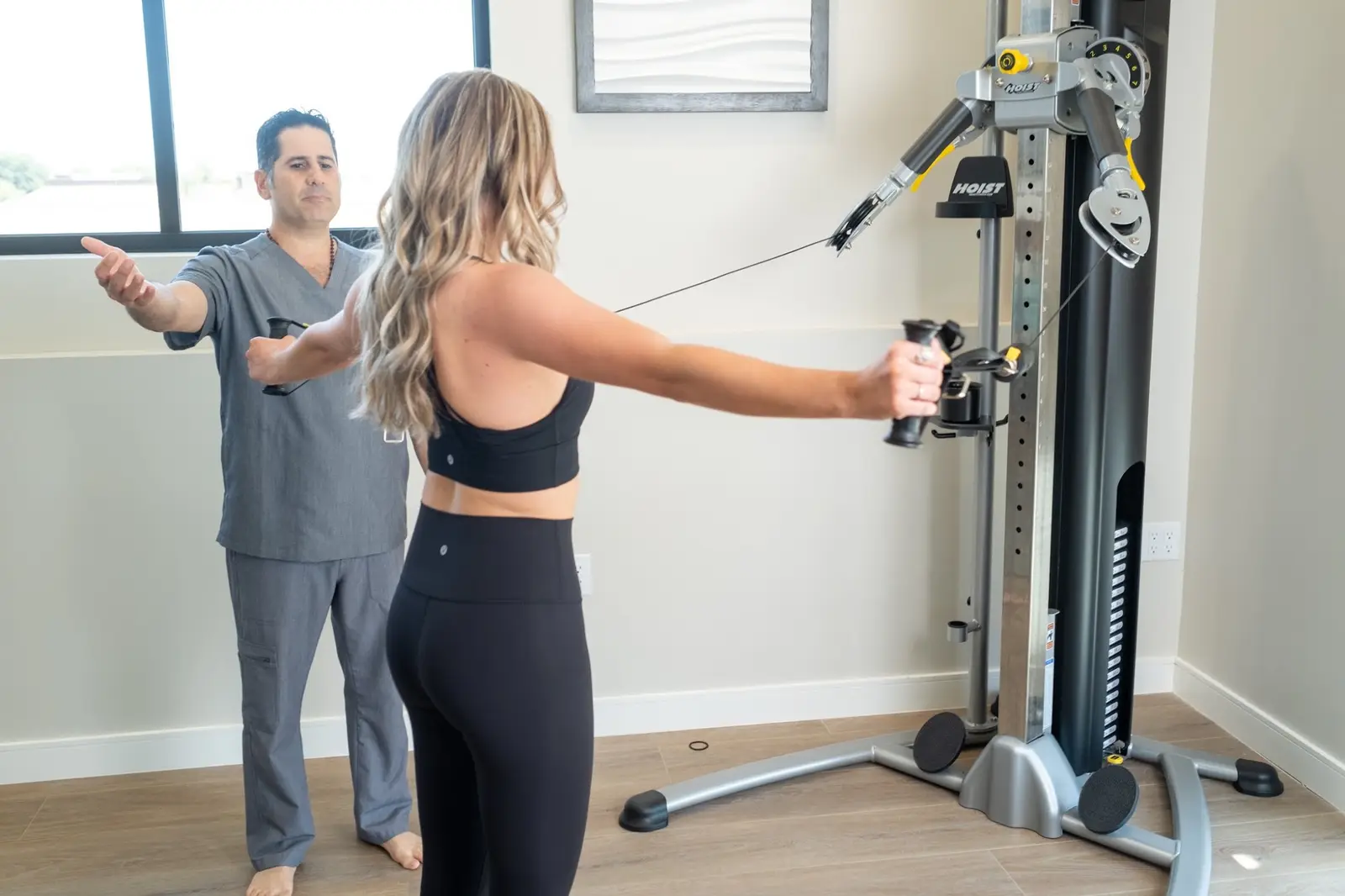
- Rebuild strength. Targeted exercises, including McKenzie-based movements, strengthen the muscles that support your spine so you're less likely to re-injure it.
Whiplash and neck injuries
Whiplash is a sprain or strain of the neck caused when your head is thrown backward and forward. It's especially common after rear-end collisions, even at low speeds. Typical signs include neck pain and stiffness, trouble turning your head, headaches at the base of the skull and pain spreading into the shoulders.
Early care focuses on gentle range-of-motion work and soft tissue therapy rather than forceful techniques. As the acute pain settles, adjustments help restore normal joint motion and exercises rebuild the deep neck muscles that stabilize your head. If neck pain lingers or keeps returning, our page on neck pain explains other causes we check for.
Back pain after a car accident
The force that whips the neck also travels down the spine. Bracing against the steering wheel, twisting at impact or the pull of a lap belt can strain the muscles and ligaments of the mid and lower back and irritate the small facet joints between vertebrae.
Back strains are usually treated with soft tissue work, gentle mobilization and adjustments, followed by core and hip strengthening. You'll also get practical advice on sitting, sleeping and lifting while you recover. For self-care in the first few days, see how to relieve back pain caused by whiplash. If your pain sits low in the spine, our lower back pain page goes into more detail.
New patient special
See if car accident injuries is right for you — $75 exam
Herniated and bulging disc injuries
The discs between your vertebrae have a tough outer ring and a softer center. A sudden load can make a disc bulge, or let some of that inner material push through the outer layer, which is a herniated disc. When a disc presses on a nerve, you may feel pain, numbness or tingling travelling into an arm or leg.
Many disc injuries are managed with conservative care. Depending on your exam, that may include spinal decompression, a gentle, non-surgical traction therapy, along with adjustments where appropriate and directional exercises. We track nerve signs such as reflexes, strength and sensation at each re-exam, and refer you for imaging or to a specialist if they aren't improving.
Soft tissue injuries, headaches and concussion
Bruised and strained muscles, sprained ligaments and seatbelt soreness across the chest and shoulder are common after a crash. Massage therapy, trigger point work and muscle stimulation can relieve spasm and help you move more comfortably as these tissues recover.
Headaches after a collision often start in the neck and may ease as neck function improves. A concussion is different: it's a brain injury that can happen even if your head never hit anything, and it needs medical evaluation first. Warning signs include a headache that keeps getting worse, confusion, memory gaps, dizziness, nausea, ringing in the ears and sensitivity to light. We screen for these at your exam and refer you to a physician when we see them. Chiropractic care for related neck pain can continue once you're medically cleared.
Delayed symptoms: why injuries can appear days later
Adrenaline and shock can hide pain at the scene, and inflammation builds over the following hours and days. It's common to feel fine on the day of the accident and wake up stiff and sore a day or two later. Watch for:
- Neck or back stiffness that develops overnight
- Headaches that start a day or more after the crash
- Tingling, numbness or pain spreading into an arm or leg
- Pain between the shoulder blades or across the shoulders
- Dizziness, trouble concentrating or poor sleep
New symptoms after even a minor collision are worth an evaluation. Our car accident chiropractor page explains how a first visit works and where our five clinics are.
When to go to the emergency room
Some injuries can't wait for a chiropractic visit. Get emergency care right away for:
- A severe or worsening headache, confusion, repeated vomiting or loss of consciousness
- Chest pain, abdominal pain or shortness of breath
- Dizziness, fainting or large areas of deep bruising, which can signal internal bleeding
- New numbness or weakness in the arms or legs
- Loss of bladder or bowel control
These can be signs of concussion, internal injury or serious nerve compression. Chiropractic care can begin once they've been ruled out.