



By the Fitness Chiropractic team · Updated
What is sciatica?
Sciatica isn't a diagnosis on its own — it's a symptom. It describes pain, tingling or numbness along the sciatic nerve, which runs from the lower back through the hips and buttocks and down each leg. Most people feel it on one side only.
It often starts like a nagging cramp in the buttock or the back of the thigh and can build until sitting, standing up or driving becomes hard. Some people also notice numbness or weakness in the leg or foot.
Common causes of sciatica
The nerve is usually being compressed or irritated somewhere in the lower spine or pelvis. The most common reasons include:
- A herniated or bulging disc pressing on a nerve root — see herniated disc and bulging disc
- Spinal stenosis, a narrowing of the space around the nerves
- Piriformis syndrome, where a tight or spasming muscle deep in the buttock squeezes the nerve
- Spondylolisthesis, when one vertebra slips forward over another
- Bone spurs that crowd the nerve as the spine ages
Age, extra body weight, long hours of sitting, physically demanding work and diabetes all raise the risk.
How our chiropractors treat sciatica
Every plan starts with a full orthopedic and neurological exam so we know why the nerve is irritated before we treat it. Depending on what we find, care may include:
- Chiropractic adjustments to restore motion to stiff joints in the lower back and pelvis and take pressure off irritated tissues — learn more about chiropractic adjustments
- Spinal decompression, a gentle, non-surgical traction therapy often used when sciatica is linked to a disc problem
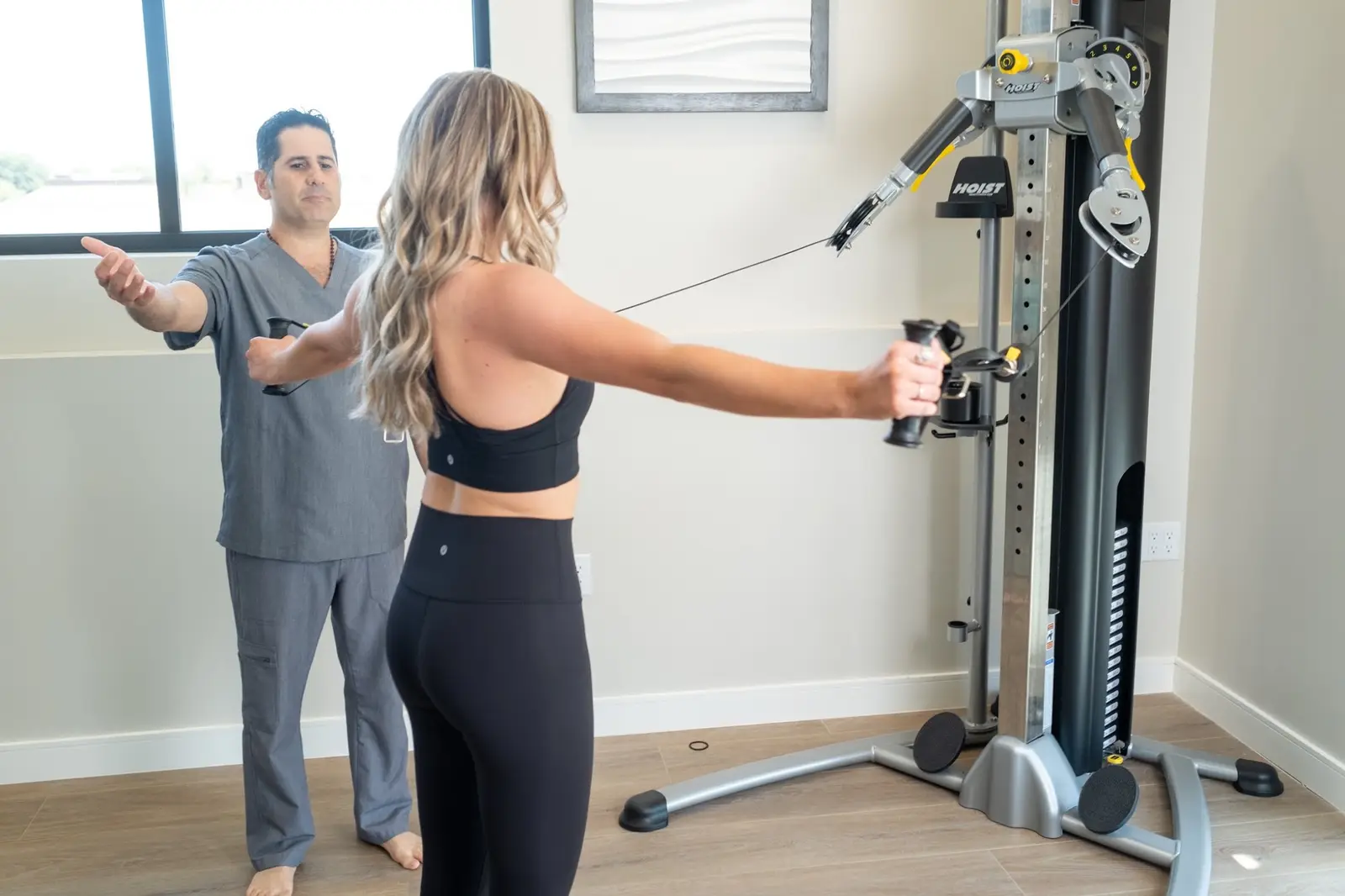
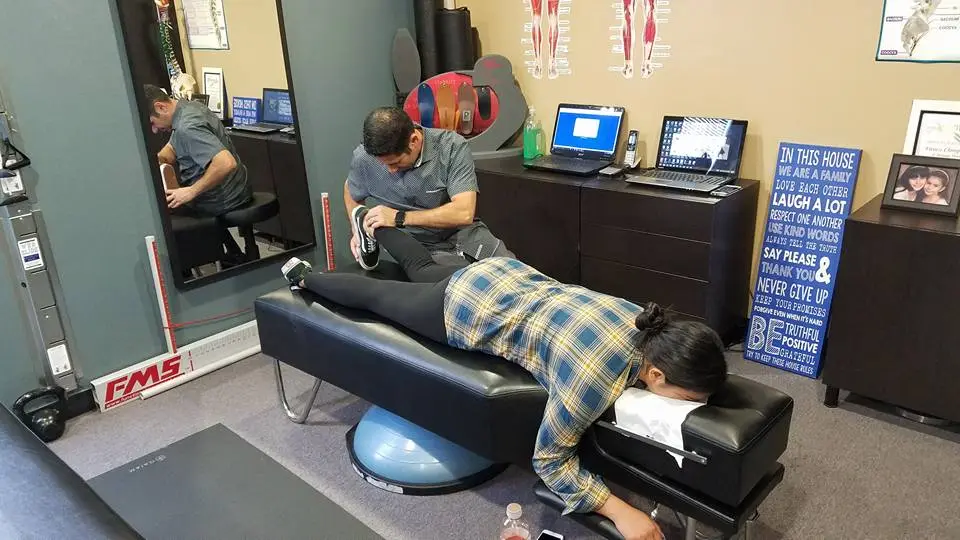
- Soft tissue therapy and massage to release the glutes, hamstrings and lower back muscles that guard around the pain
- Directional exercises such as the McKenzie Method that help centralize leg pain back toward the spine
- Acupuncture with our on-site acupuncturist for stubborn pain and muscle tension
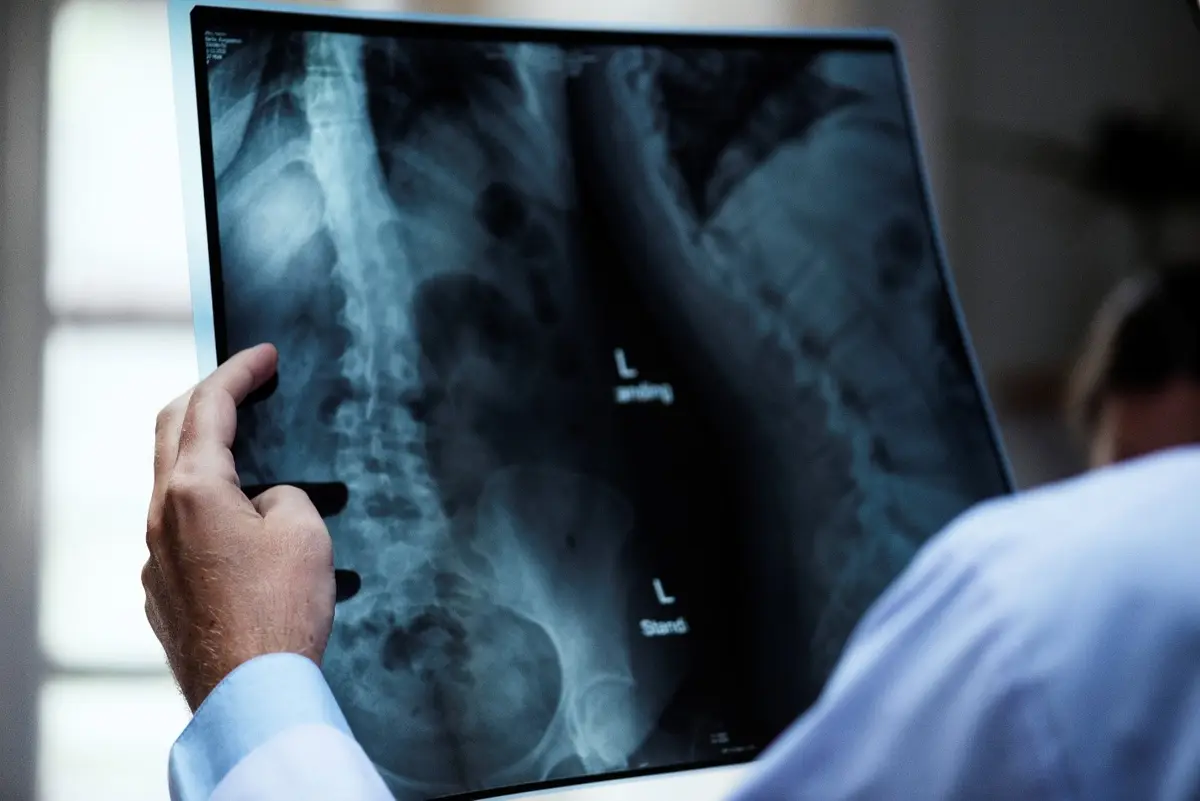
We'll explain what we found, what we recommend and roughly how long it should take — then re-check your progress as you improve. If anything in your exam points to a problem that needs imaging or a medical specialist, we'll tell you and refer you.
New patient special
Get your sciatica checked — $75
How many visits will I need?
There's no one-size-fits-all number. Recent, mild sciatica often settles faster than pain you've had for months, and disc-related cases usually need more visits than a tight piriformis. Your chiropractor will give you a realistic estimate after your first exam and adjust it as you go.
What you can do at home
While you're waiting for your first visit:
- Use an ice pack on the most painful area for 15–20 minutes at a time to calm inflammation
- Keep moving gently — short walks are usually better than bed rest
- Avoid long stretches of sitting; get up every 30 minutes
- Over-the-counter pain relievers can take the edge off short term (follow the label)
When sciatica needs urgent care
Go to an emergency room right away if leg pain comes with loss of bladder or bowel control, numbness in the groin or inner thighs, or leg weakness that's quickly getting worse. These can be signs of a serious nerve compression that needs immediate medical attention.
For everything else, a chiropractic exam is a good first step. Sciatica is one of the most common reasons people visit our clinics, and many patients also come in for related lower back pain.