


By the Fitness Chiropractic team · Updated
Why whiplash can cause back pain
Whiplash is usually thought of as a neck injury, but your whole spine moves during a collision. As your body is thrown forward and back against the seat and seatbelt, the muscles, ligaments and small joints of the upper, mid and lower back can be strained too. Bracing your arms against the wheel or twisting toward the impact adds to the load.
That's why back pain after a car accident often shows up alongside neck pain, and why it may build over a day or two rather than appearing at the scene. You can read more about the neck side of the injury on our whiplash page.
Rule out a serious injury first
Self-care is only for back pain without warning signs. Go to an emergency room right away if you have:
- Numbness, tingling or weakness in your legs
- Loss of bladder or bowel control, or numbness in the groin or inner thighs
- Severe pain after a high-speed crash, or pain that wakes you at night and won't settle
- Abdominal pain, chest pain, dizziness or fainting
If none of these apply, the steps below can help while you wait for an evaluation.
What to do in the first few days
- Keep moving gently. Short, frequent walks are usually better than bed rest, which tends to leave the back stiffer.
- Use ice or heat for comfort. Many people prefer ice for 15–20 minutes at a time in the first couple of days, then heat to relax tight muscles. Use whichever feels better, with a cloth between your skin and the pack.
- Change positions often. If you sit for long periods, get up every 30 minutes or so.
- Avoid heavy lifting, twisting and strenuous exercise until you've been evaluated.
- Sleep in a supported position, such as on your side with a pillow between your knees, or on your back with a pillow under them.
- Over-the-counter pain relievers can take the edge off short term. Follow the label, and check with your doctor or pharmacist if you take other medications.
New patient special
Talk to a chiropractor — $75 first visit
Gentle movements that may help
Once serious injury has been ruled out, easy range-of-motion movements can ease stiffness. Move slowly, stay within a comfortable range, and stop if pain sharpens or spreads into a leg:
- Pelvic tilts lying on your back with your knees bent
- Knee-to-chest stretches, one leg at a time
- Cat-camel on your hands and knees, gently rounding and then arching your back
- Shoulder rolls and gentle neck turns, since neck and upper-back tightness often travel together
Your chiropractor can tell you which movements suit your injury and when it's time to add strengthening work.
How a chiropractor treats back pain from whiplash
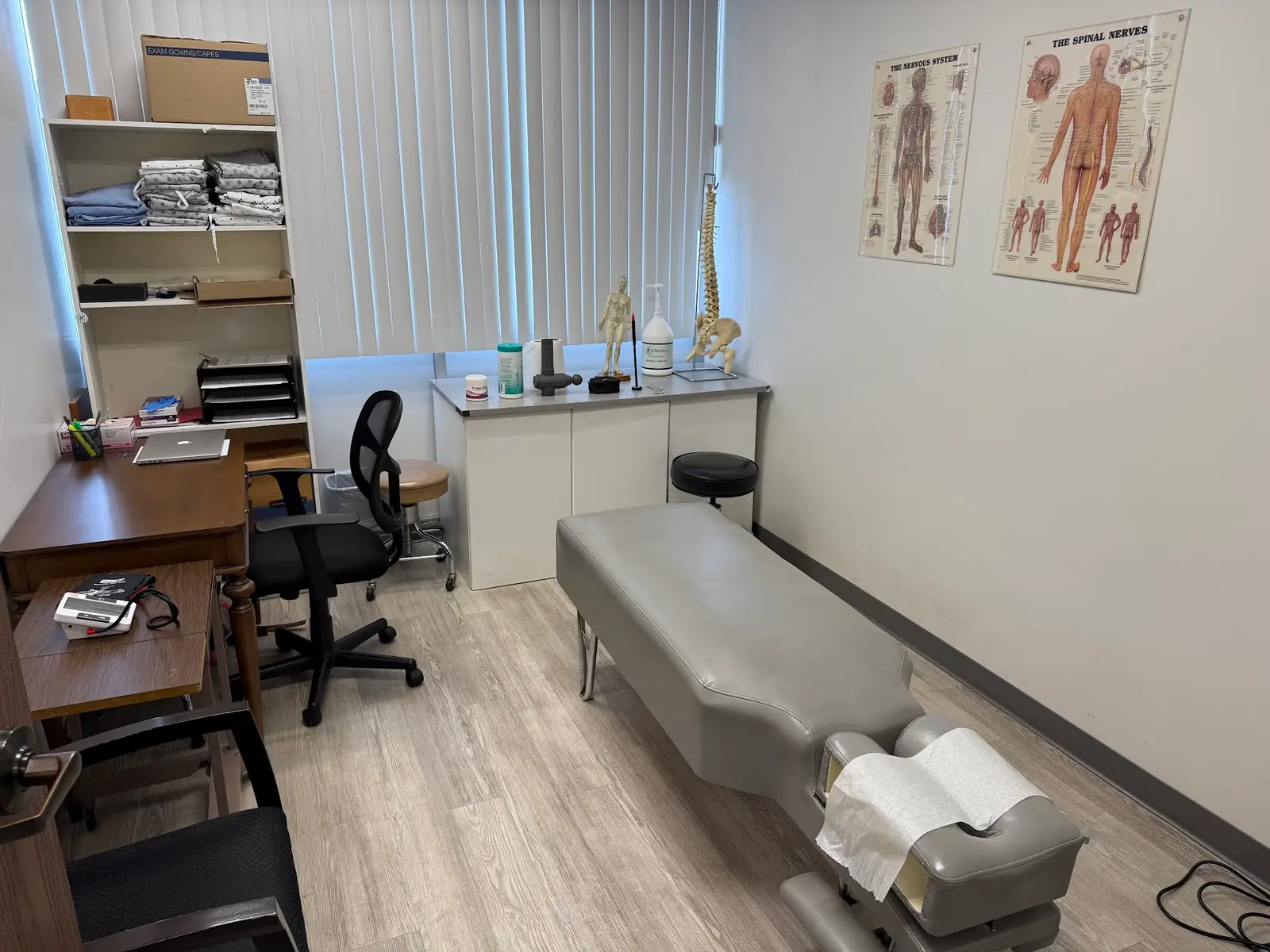
Your evaluation looks at your whole spine, not just the sorest spot. Your chiropractor watches how you stand and move, feels along the spine for tight or tender areas and joints that aren't moving well, and runs orthopedic and neurological tests to check the nerves.
Care is usually staged:
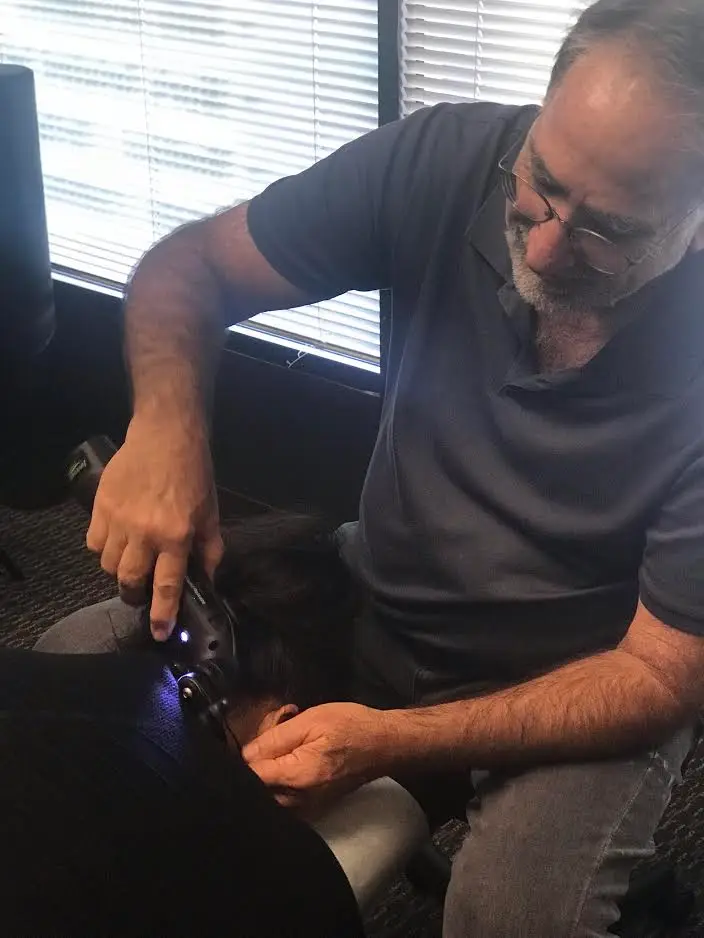
- Early on, the focus is calming pain and spasm with soft tissue work, gentle stretching and modalities such as ultrasound or muscle stimulation.
- As pain settles, adjustments and mobilization restore normal motion to stiff joints in the mid and lower back.
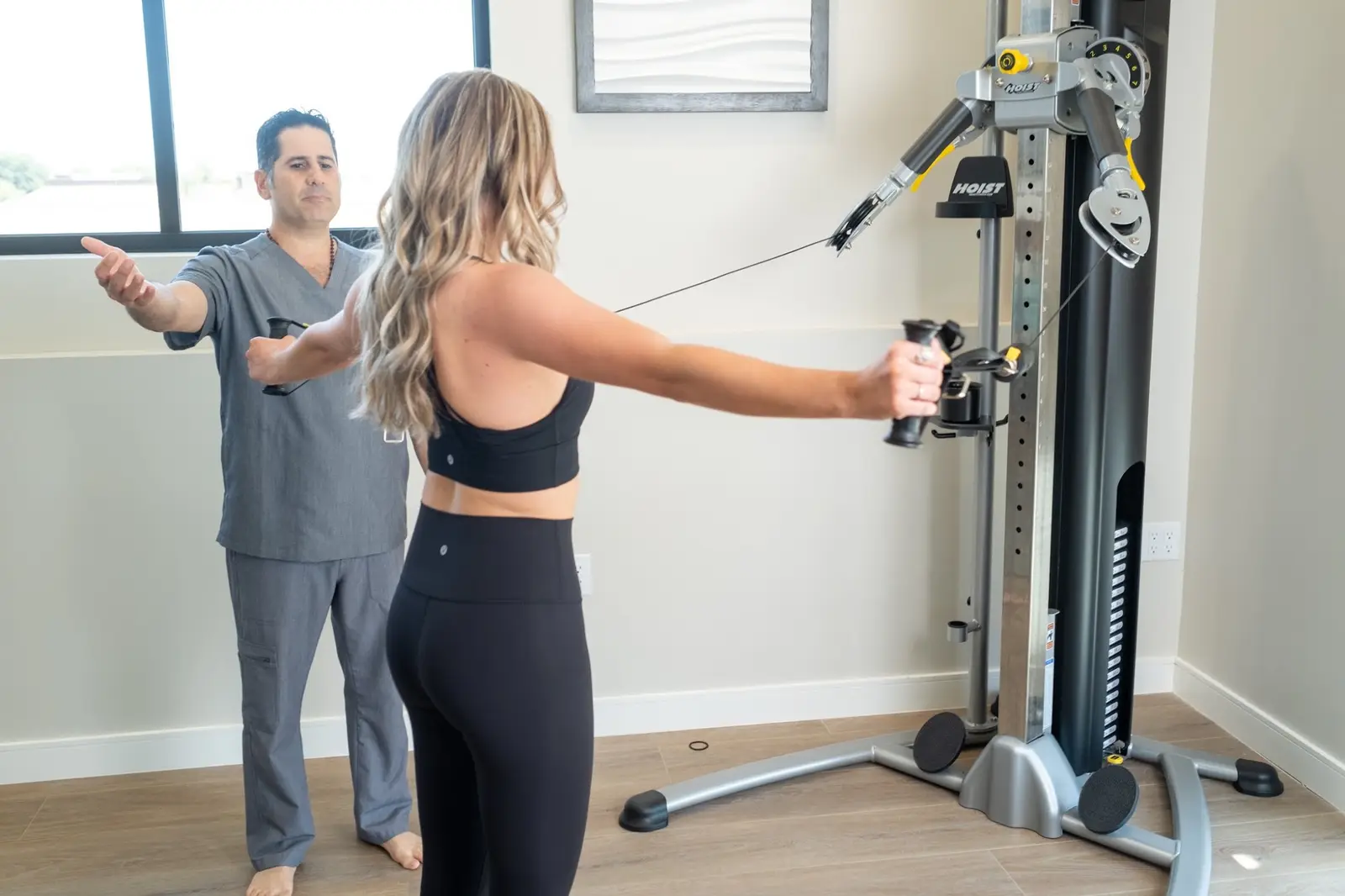
- Later, strengthening and stability exercises help support your spine and reduce the chance of flare-ups.
Massage therapy is often added to relax guarded muscles. For a broader look at how collision injuries are handled, see car accident injury treatment.
How long does back pain after a car accident last?
It varies with the injury and how you respond. Many muscle strains improve noticeably over a few weeks, while injuries involving the joints or discs can take longer. Pain that isn't improving after a few days, or that limits your work, sleep or daily activities, is a good reason to get evaluated rather than waiting it out.
If your pain is centered low in the spine, our lower back pain page covers that area in more depth, and our back pain guide looks at the wider range of causes.
When to see a chiropractor or doctor
Book an evaluation if back pain lasts more than a few days, keeps coming back, or comes with neck pain and headaches. A car accident chiropractor can examine you, document your injuries and build a plan around them.
See a medical doctor promptly if you have any of the warning signs above, a history of osteoporosis or cancer, or pain that keeps getting worse despite rest.