By the Fitness Chiropractic team · Updated
What is a Deep Muscle Stimulator?
The Deep Muscle Stimulator (DMS) is a professional handheld percussion device. Its head moves rapidly back and forth in short strokes, delivering percussion and vibration into muscle tissue. Once your chiropractor has identified which muscles are contributing to your pain or limited movement, the DMS lets them work those areas quickly and precisely.
If you've used a massage gun at home, the idea is similar. The difference is that in the clinic it's used by a provider who has examined you and knows where, and where not, to apply it.
How DMS therapy works
Muscles that have been strained, overworked or held tight for a long time can become stiff, tender and slow to relax. Rapid percussion stimulates the muscle and the nerve endings within it, which may:
- Help tight muscles relax and reduce protective guarding
- Ease soreness and tenderness, including around tight, knotted areas
- Temporarily increase blood flow to the area being treated
- Make stretching, exercise and adjustments more comfortable by improving short-term range of motion
These effects are usually short-lived on their own, which is why we use DMS as one part of a broader plan.
What DMS is used for
DMS therapy is commonly used alongside other care for:
- Muscle tightness and spasm in the neck, shoulders, back and hips
- Muscle strains, such as a hamstring strain, once the initial injury has settled
- Training soreness and overuse during sports injury treatment
- Muscle tension that comes with tendon problems such as tennis elbow
New patient special
See if deep muscle stimulator is right for you — $75 exam
How it fits into your visit
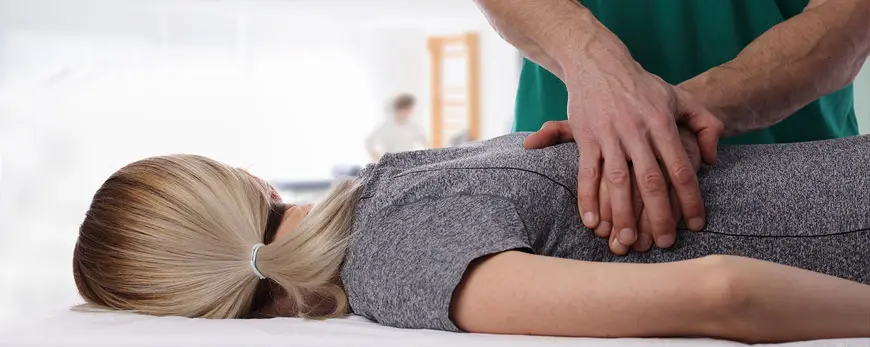
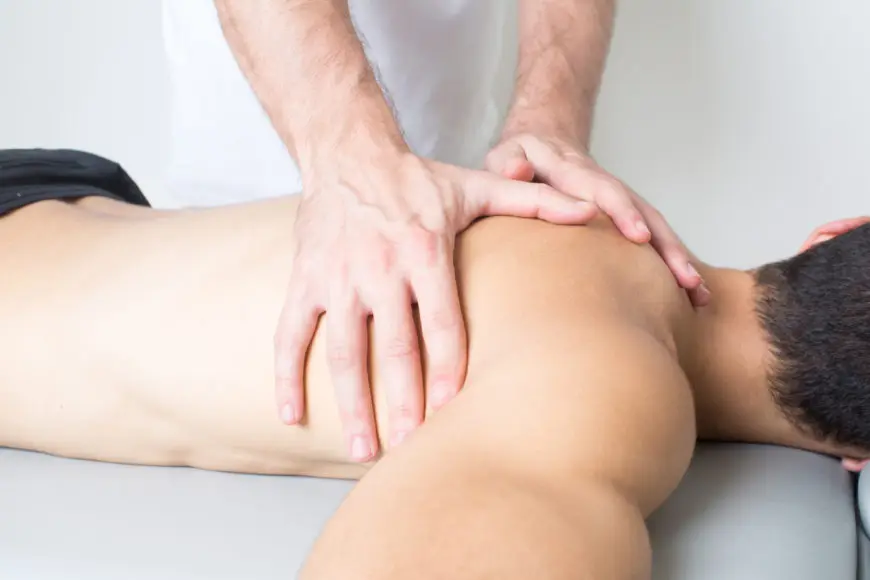
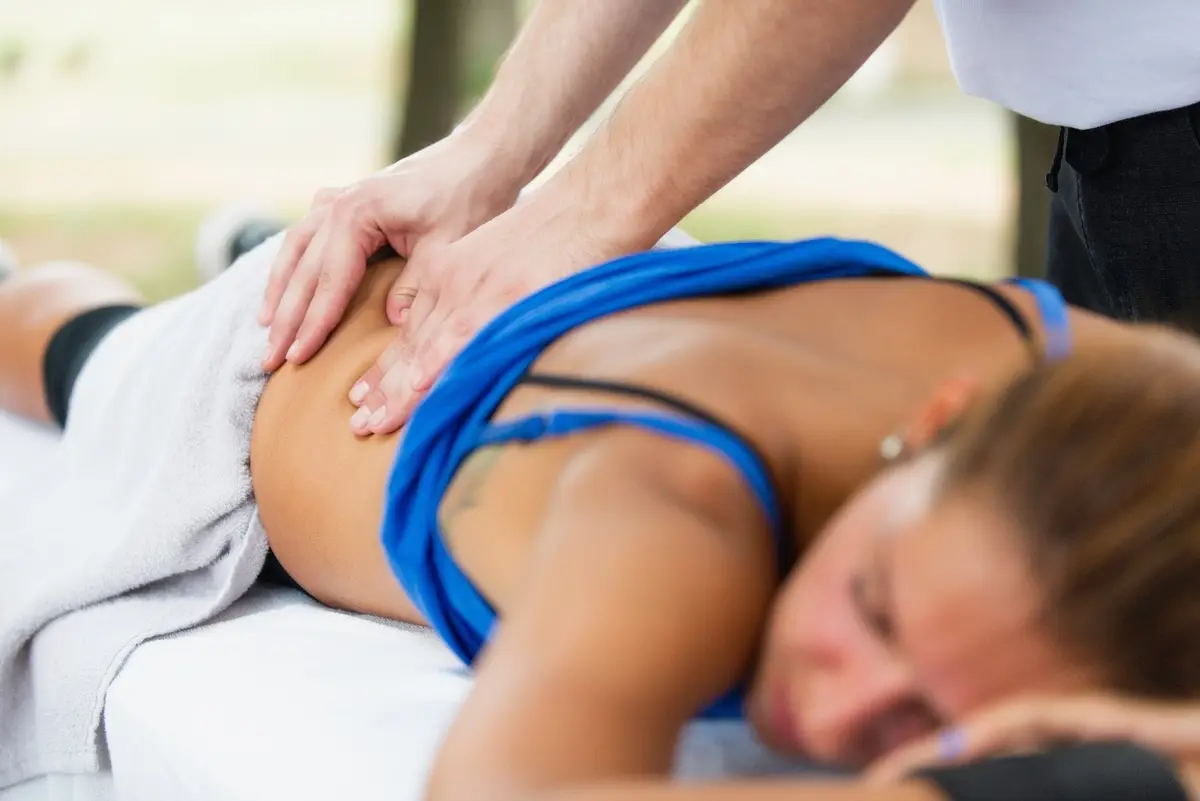
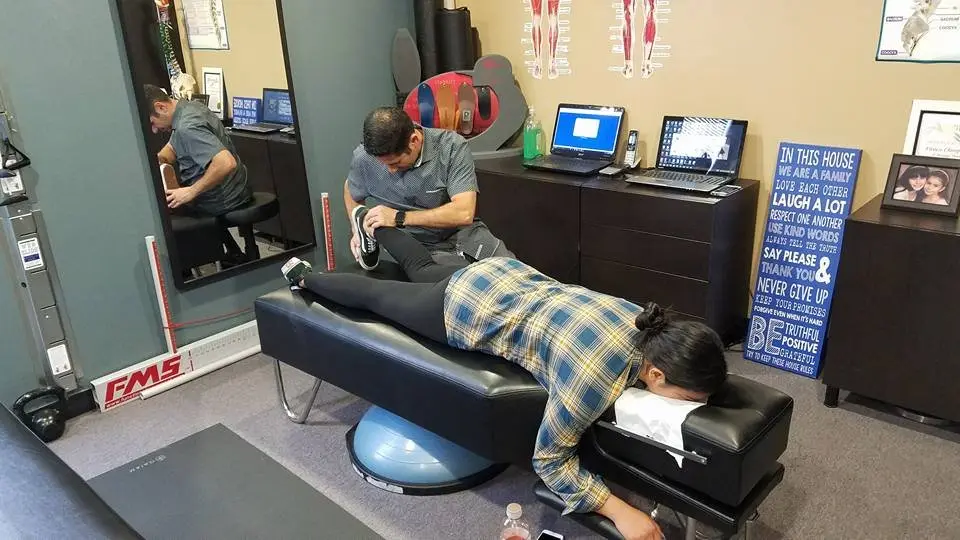
DMS is usually applied for a few minutes over the target muscles before an adjustment or stretching, because relaxed muscles often make the next step easier and more comfortable. It may be combined with other soft tissue methods, which you can read about on our page about chiropractic adjustment techniques, and with massage therapy for longer hands-on work.
What does DMS therapy feel like?
Most people feel a strong, rhythmic vibration and pressure rather than pain. Over very tight or tender spots it can feel intense, but your provider will adjust the speed, pressure and placement to your comfort. Mild soreness the next day, similar to after a deep massage, is normal.
Using a massage gun at home
If you already own a massage gun, it can be a handy way to manage everyday muscle tightness between visits. Ask your chiropractor which muscles to target and which to leave alone. A few general tips:
- Keep it on soft, muscular areas and away from bones, joints and the spine itself
- Start on the lowest setting and use light pressure
- Keep the device moving, spending a minute or two on each area rather than holding it on one spot
- Follow up with the stretches or exercises in your home program
Stop if it causes sharp pain, numbness or tingling, and mention it at your next visit.
Who should avoid DMS therapy?
Percussion isn't applied over:
- Fractures, fresh sprains with swelling, or recent bruising
- Open wounds, skin infections or rashes
- Known or suspected blood clots, or varicose veins
- Areas of numbness, where you can't give feedback on pressure
- The front of the neck, the abdomen during pregnancy, or directly over a pacemaker
Tell your chiropractor if you take blood thinners or have a bleeding disorder, osteoporosis or any condition that affects sensation, so they can adapt or skip DMS.