

By the Fitness Chiropractic team · Updated
A weight loss program built around you
Most people who struggle with their weight have already tried a diet or two. Crash diets and extreme restrictions can work for a few weeks, but they're hard to keep up, they can leave you feeling unwell, and the weight often comes back. We take a slower, steadier approach that lets your body and your routine adjust gradually, so the changes are easier to maintain.
This isn't a medical weight loss clinic. We don't prescribe medications or injections. Instead, we combine nutrition, exercise and supportive care from one team that already knows your health history, injuries and goals.
What the program can include
Your plan is tailored to your goals, health and schedule. It can combine:
- Nutrition counseling to build practical eating habits that keep you full and satisfied, because dieting doesn't have to mean going hungry
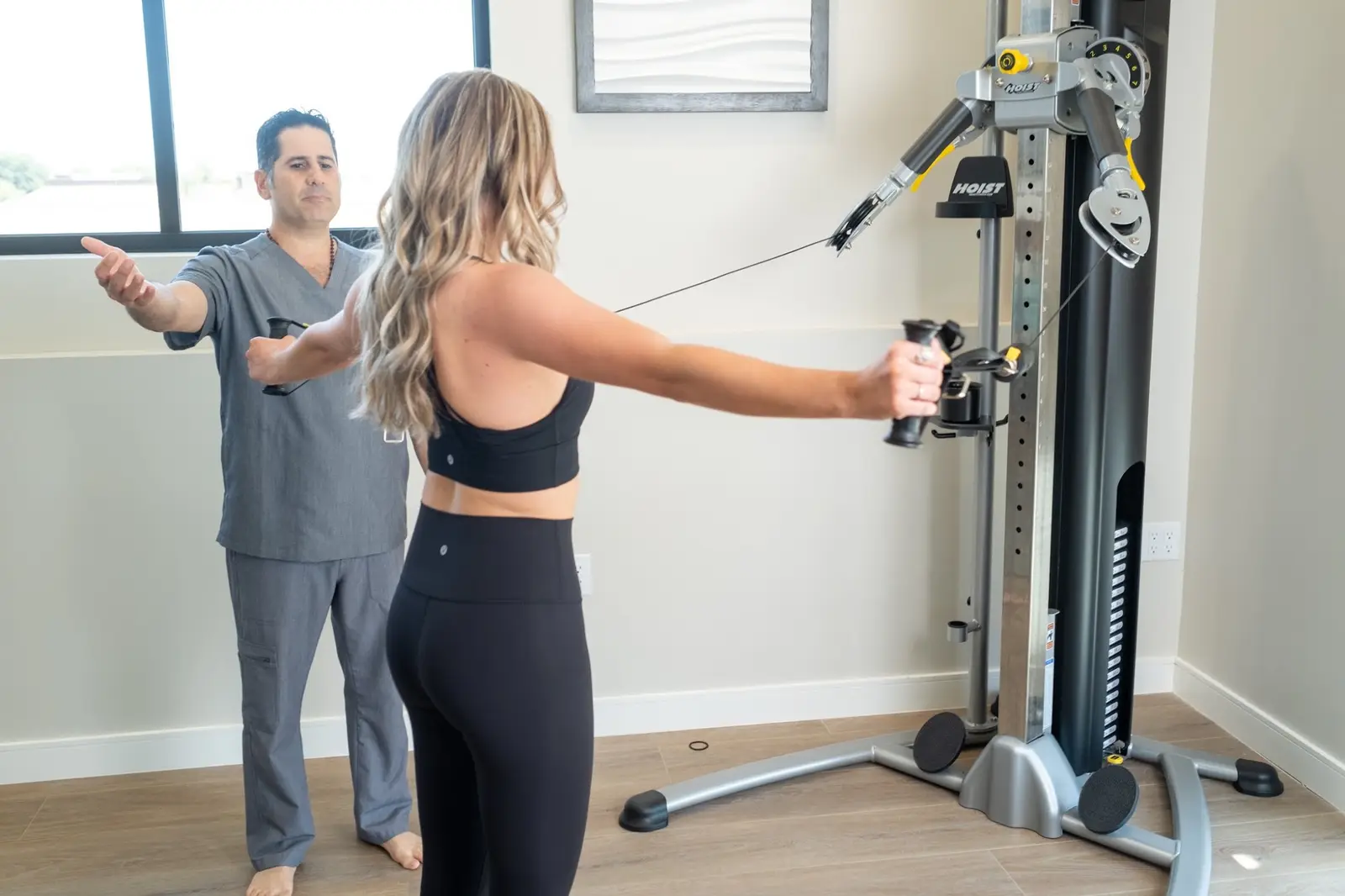
- Personal training with a program matched to your current fitness, building strength and muscle while protecting your joints
- Acupuncture with our on-site acupuncturist, which some people use to help manage stress and cravings
- Massage therapy to ease sore muscles as you become more active, and to help with stress, a common trigger for overeating
- Chiropractic care to keep back and joint pain from getting in the way of staying active
Your plan starts with a conversation about your goals, health history, current activity level and any pain or injuries. You don't have to use every service. Some people only want help with eating habits; others want a full plan with training and acupuncture. We'll recommend what makes sense for you.
Why pain care matters for weight loss
Back, knee and foot pain are some of the most common reasons people stop exercising. At the same time, extra body weight adds load to the spine, hips, knees and feet, which can make that pain worse. It's a frustrating cycle.
Treating pain early with chiropractic adjustments and soft tissue care can make it easier to stay active while you build fitness. If lower back pain has been stopping you from exercising, it's worth addressing that first so your training plan starts on solid ground.
New patient special
See if weight loss is right for you — $75 exam
Setting realistic goals
No one can safely promise you a specific number on the scale. Results depend on your diet, activity, sleep, stress, medications and medical history. Public health guidance, such as the CDC's, describes losing about 1 to 2 pounds a week as a gradual, steady pace that people are more likely to maintain.
Rather than focusing only on weight, we'll also track the changes you can feel: energy, strength, how your clothes fit, how far you can walk and whether your pain is improving. Small, consistent changes add up.
How acupuncture fits in
Acupuncture is sometimes promoted as a weight loss fix, and we don't see it that way. Research on acupuncture for weight loss is mixed. Some people find it helps them feel calmer and more in control of stress-related eating, which can make healthy habits easier to stick with. We offer it as an optional, supporting part of the plan, not a replacement for good nutrition and regular exercise.
Simple habits that help
While you're getting started:
- Build meals around protein, vegetables, fruit and whole grains
- Drink water through the day and cut back on sugary drinks and alcohol
- Move regularly, even if that's a short walk every day
- Add strength training two or more days a week; these strength training exercises you can do at home are a good start
- Protect your sleep, since poor sleep can make hunger harder to manage
For more ideas, read our weight loss tips.
Staying on track
Weight loss rarely moves in a straight line. Plateaus, busy weeks and holidays are normal, and they don't mean the plan has failed. Regular check-ins with your team give you a chance to look at what's working, adjust your eating or training, and deal with any new aches before they derail you. As your fitness improves, your training will progress so your body keeps adapting.
Talk to your doctor first
Check with your physician before starting a weight loss program if you have a medical condition such as diabetes or heart disease, take regular medication, are pregnant or breastfeeding, or have a history of disordered eating. Your doctor can advise on any limits, and we'll build your plan around them. If you're considering weight loss medication, that's a conversation to have with your physician.