


By the Fitness Chiropractic team · Updated
Why lower back pain is so common
Your lower back, or lumbar spine, is five large vertebrae that carry most of your upper body's weight and handle most of your bending, lifting and twisting. That workload makes it the most common place for back pain — and one of the most common reasons people see a chiropractor.
Lower back trouble often shows up from your 30s onward. Spinal discs gradually lose water and flexibility, and muscles lose tone if you're not training them, so the area becomes easier to strain.
Common causes of lower back pain
- Muscle strains and ligament sprains — the most common cause, usually from lifting with poor form, a sudden movement or doing too much too soon. They often bring stiffness and muscle spasm.
- Disc problems — a herniated disc or bulging disc can cause deep back pain and may press on a nerve root.
- Nerve irritation — when a nerve root is irritated, pain, tingling or numbness can travel into the buttock and leg, known as sciatica.
- Facet and sacroiliac (SI) joint irritation — the small joints at the back of the spine, and where the spine meets the pelvis, can become stiff and sore.
- Spinal curvature changes such as scoliosis or an exaggerated inward curve (lordosis), which load muscles and joints unevenly.
- Arthritis and spondylosis — age-related wear in the joints and discs.
Spinal stenosis
Spinal stenosis is a narrowing of the spaces around the spinal cord and nerves, usually from age-related disc and joint changes. It often causes aching, cramping, numbness or weakness in the legs that gets worse with standing or walking and eases when you sit or lean forward — many people notice they can walk farther leaning on a shopping cart.
Less often, lower back pain comes from infection, a fracture or a tumor. That's one reason every new patient gets a careful exam first.
What your pain pattern tells us
How your back behaves gives useful clues:
- Pain that's worse with sitting and bending forward and eases with walking often points toward a disc
- Pain that's worse with standing or walking and eases when you sit or bend forward suggests stenosis or joint irritation
- Morning stiffness that loosens up with movement is common with joint stiffness and arthritis
- Pain that travels below the knee with numbness or tingling suggests a nerve root is involved
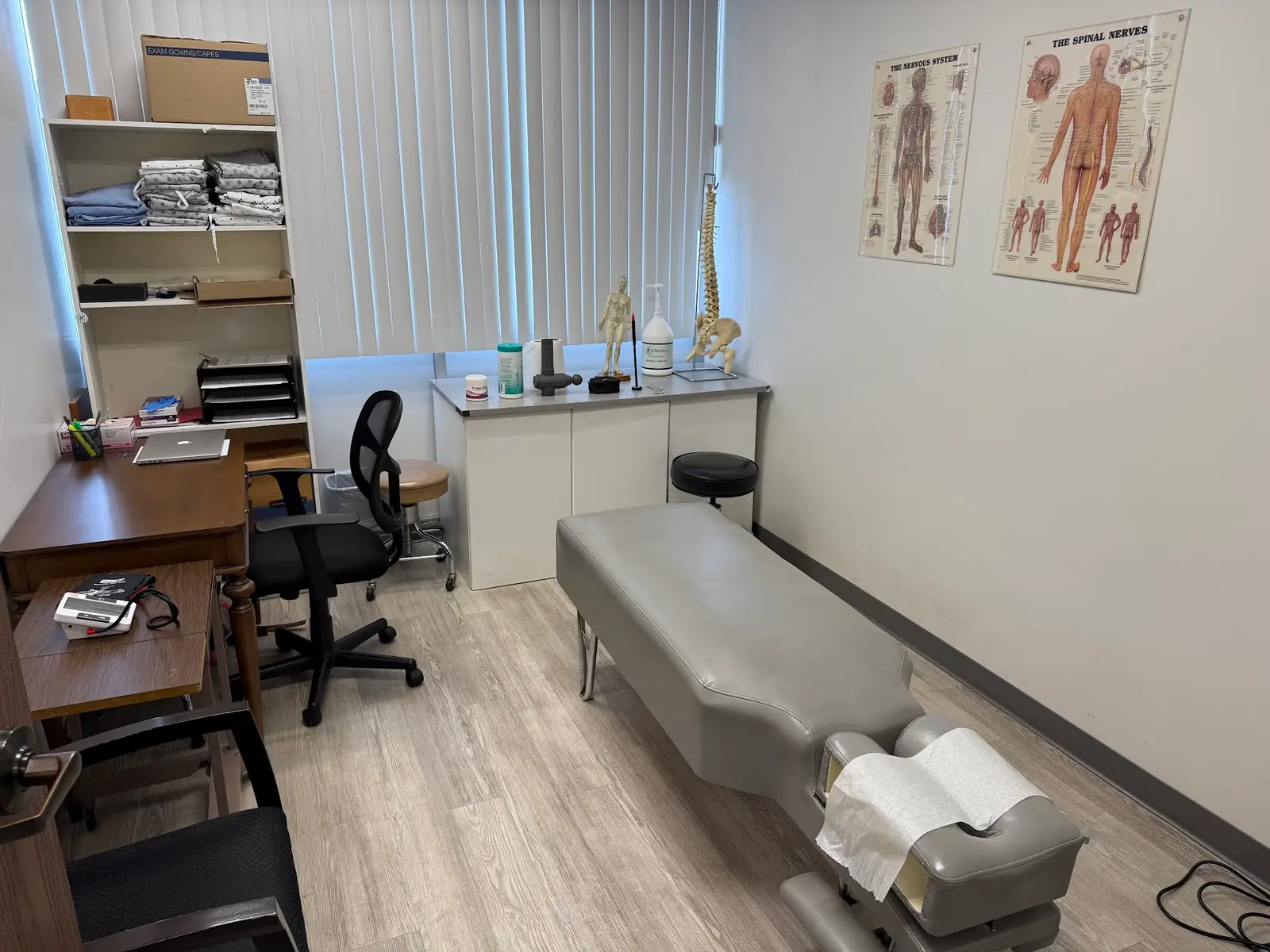
We confirm these clues with hands-on orthopedic and neurological testing — checking movement, reflexes, strength and sensation — during your exam.
New patient special
Get your lower back pain checked — $75
How a chiropractor treats lower back pain
Spinal manipulation is included in clinical guidelines as one option for low back pain, and it tends to work best alongside exercise and staying active. Your plan may include:
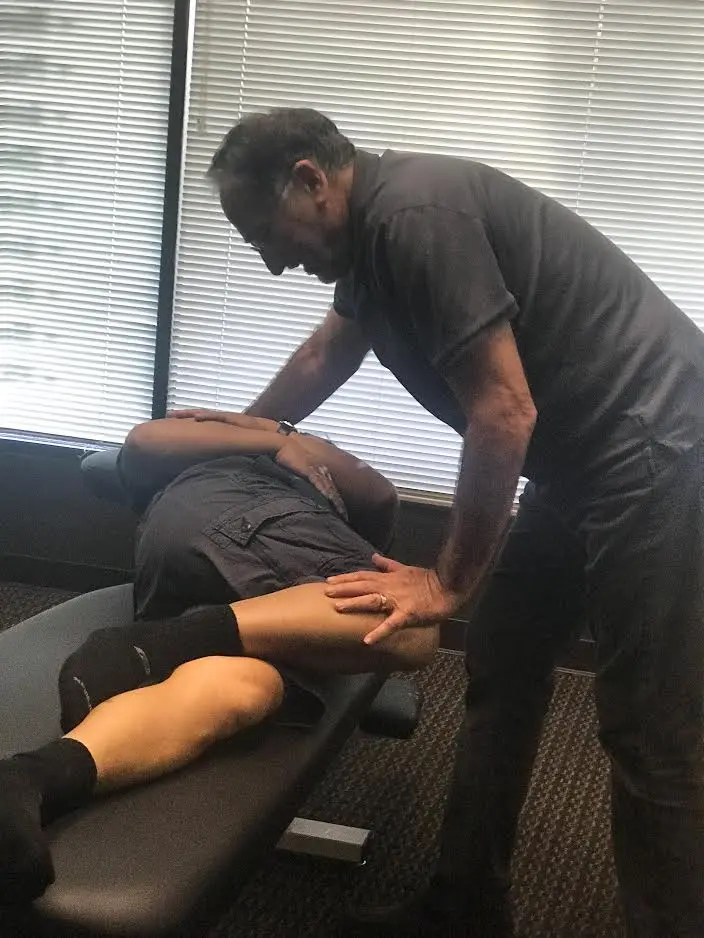
- Chiropractic adjustments to the lumbar spine and pelvis to restore motion in stiff joints
- Spinal decompression, a gentle, non-surgical traction therapy often used when a disc is involved
- Soft tissue work and massage for tight lower back, hip and glute muscles
- The McKenzie Method, a system of directional exercises that can help centralize pain and teach you to manage flare-ups yourself
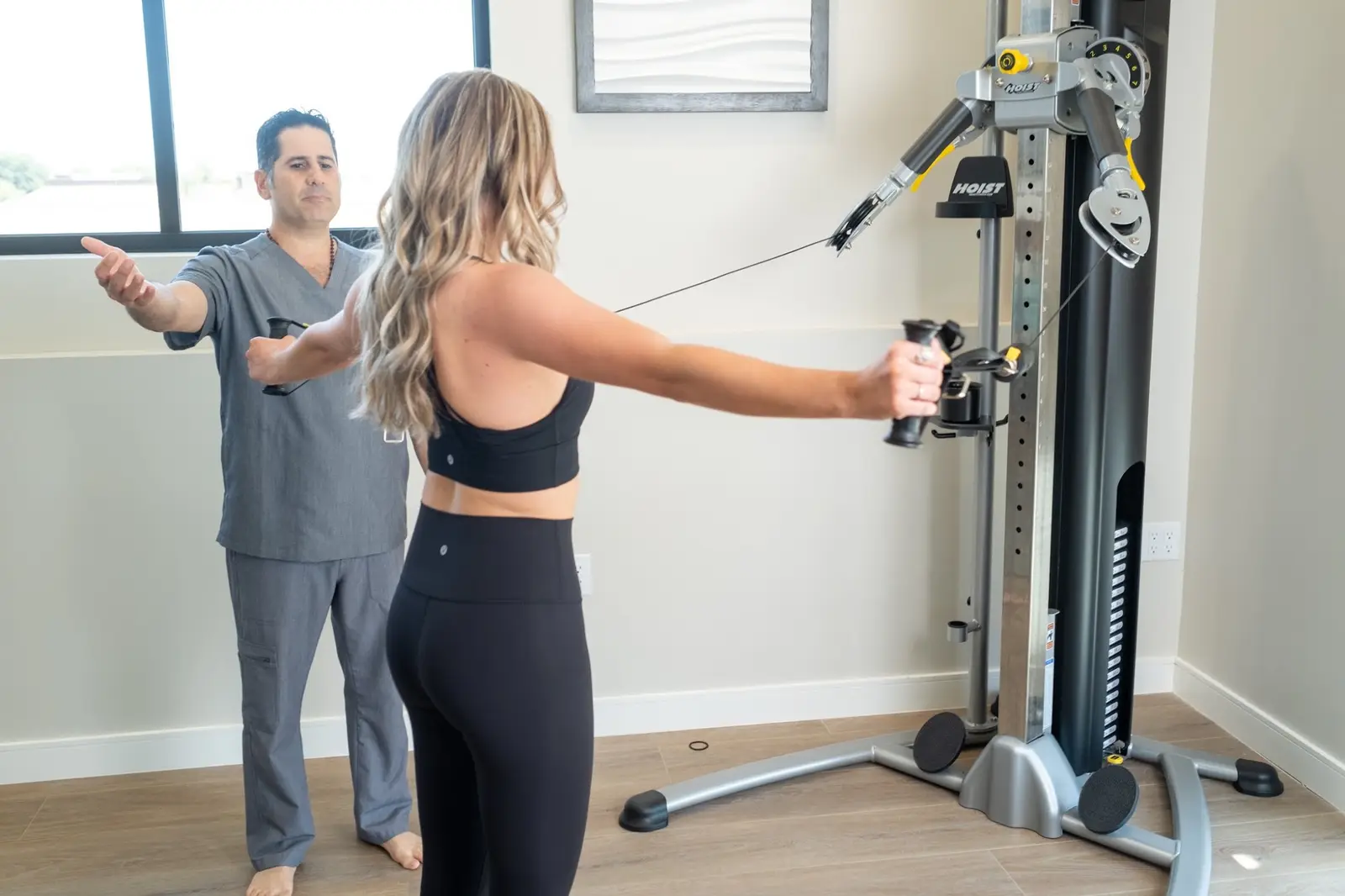
- Core and hip strengthening so your lower back isn't doing all the work
- Custom foot orthotics when flat feet or uneven foot mechanics add strain further up the chain
If your exam suggests something that needs imaging or a medical specialist, we'll tell you and refer you. You can read more about our overall approach to chiropractic treatment.
How often should you see a chiropractor for lower back pain?
There's no set number. Care often starts with more frequent visits while pain is high, then tapers as you improve and can do more on your own. A recent strain usually needs fewer visits than long-standing or disc-related pain.
Your chiropractor will give you an estimate after your first exam and adjust it based on how you respond. The goal is to get you managing your own back, not to keep you coming in indefinitely.
Staying active and preventing flare-ups
For most lower back strains, gentle activity is better than bed rest. These habits help protect your lower back:
- Lift with your legs, keep the load close and avoid twisting as you lift
- Get up and move every 30 minutes when you sit for long periods
- Build core, hip and glute strength with regular exercise
- Keep a healthy weight to reduce the load on your discs and joints
- Wear supportive footwear if you stand for long shifts
When lower back pain needs urgent care
Go to an emergency room right away if lower back pain comes with loss of bladder or bowel control, numbness in the groin or inner thighs, or leg weakness that's quickly getting worse. These can be signs of serious nerve compression.
See a medical doctor promptly for back pain with fever, unexplained weight loss, a history of cancer, or pain after a significant fall or accident.
If your pain sits higher up, between the shoulder blades or across the upper back, see our main page on back pain.